Back-EMF Motor Driver
Lorem ipsum dolor sit amet.
Description
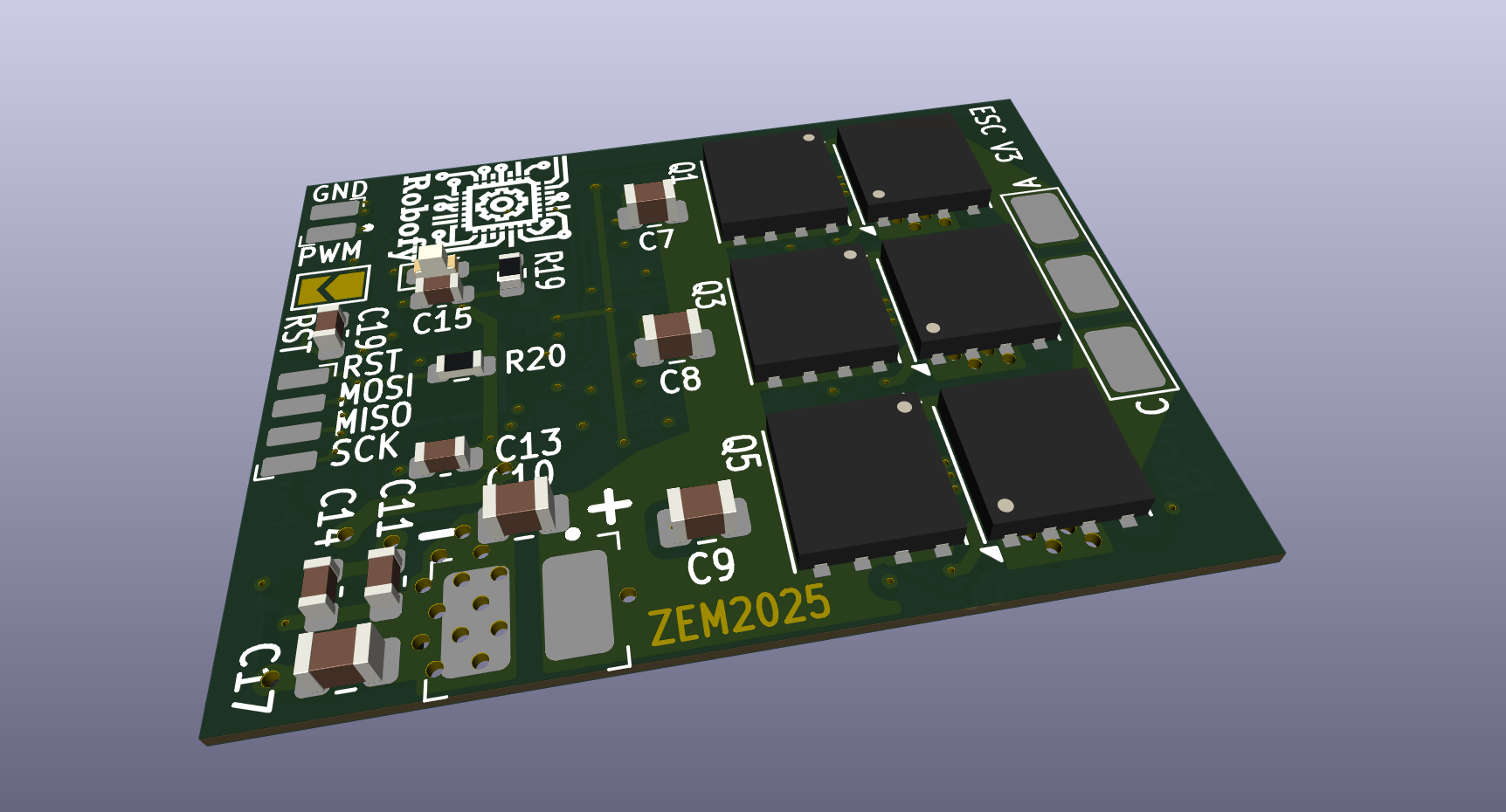
This motor driver was designed with the purpose of providing an extremely useful educational platform and to
control an EDF (Electric-Ducted-Fan) for a line follower robot that participated in the 2025 Mechatronics
Education Day Competition in Craiova, Romania.
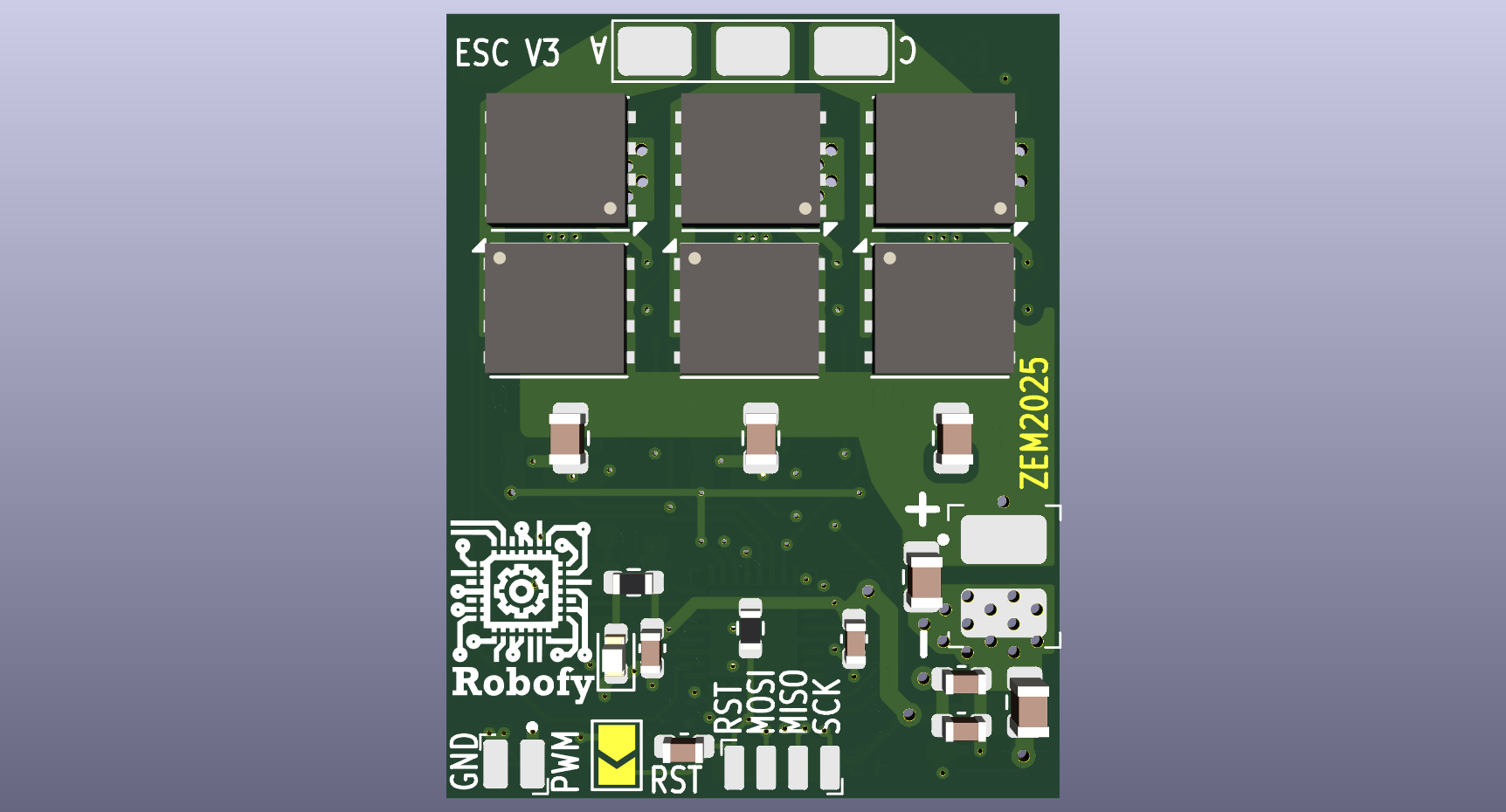
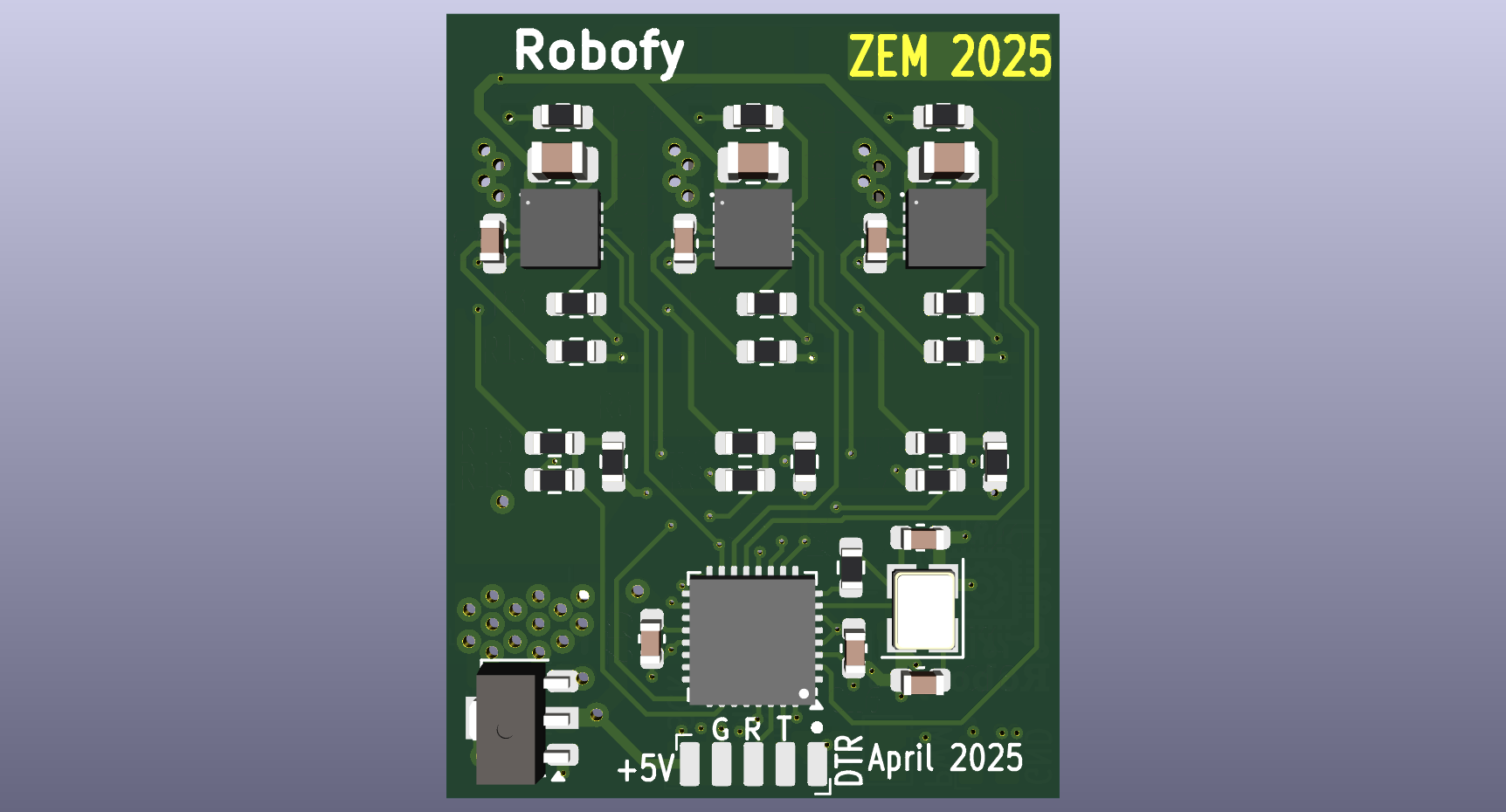
Consisting of 6 N-Channel MOSFETs, 3 DGD05473FNQ Diodes Incorporated gate drivers and an ATmega328P
microcontroller, this driver implemented its control based on back-EMF zero-crossing detection with the internal
comparator of the MCU.
Key Features
- 6 N-Channel MOSFETs for three-phase H-bridge inverter topology
- 3 DGD05473FNQ gate drivers from Diodes Incorporated for PWM control
- ATmega328P microcontroller for intelligent commutation control
- Back-EMF zero-crossing detection using internal comparator
- Sensorless commutation eliminating the need for Hall sensors
- Simple and compact circuit design suitable for educational purposes
- EDF (Electric-Ducted-Fan) drive capability
- Robust motor control for line follower applications
- Cost-effective component selection
Design Highlights
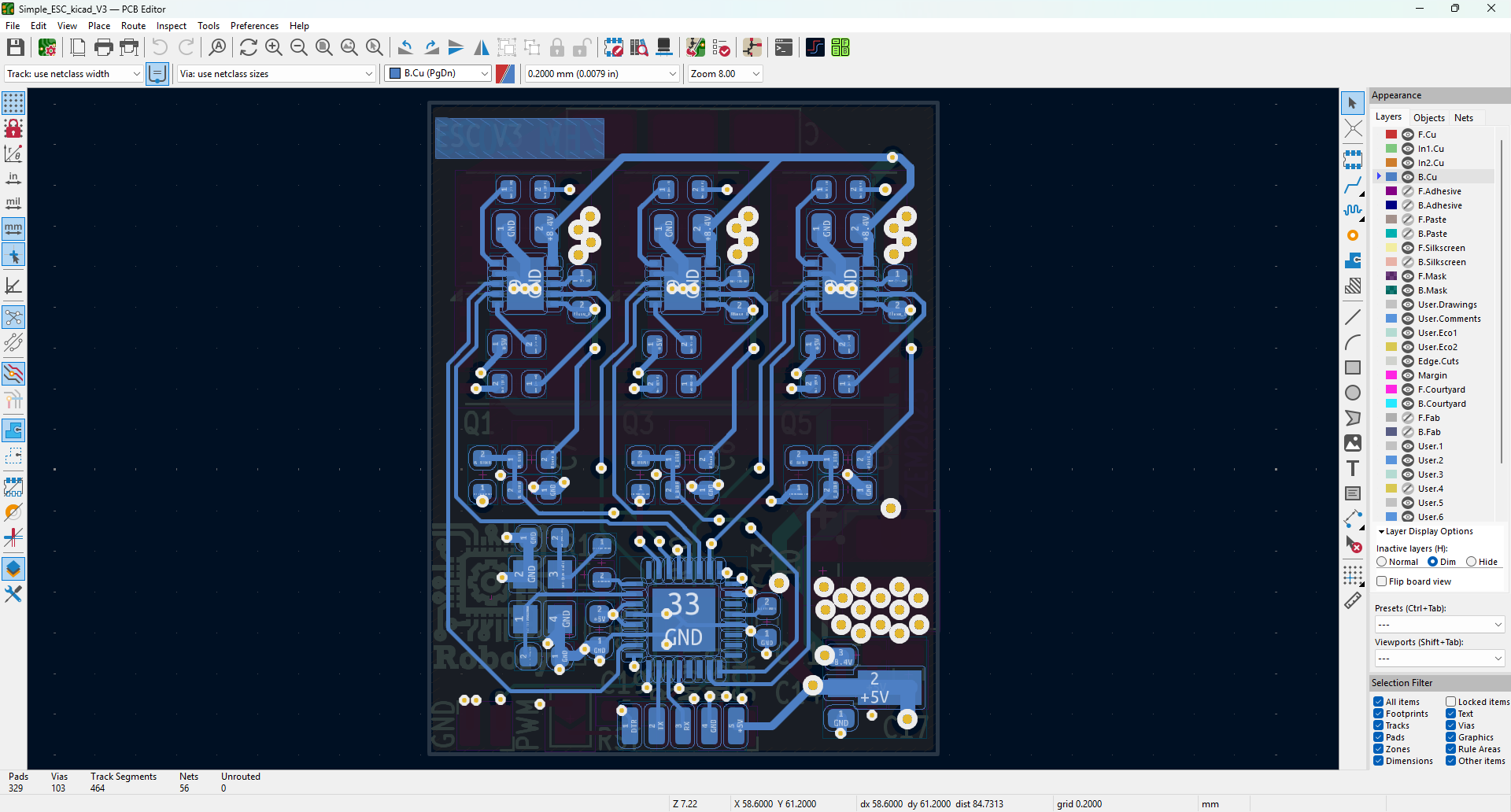
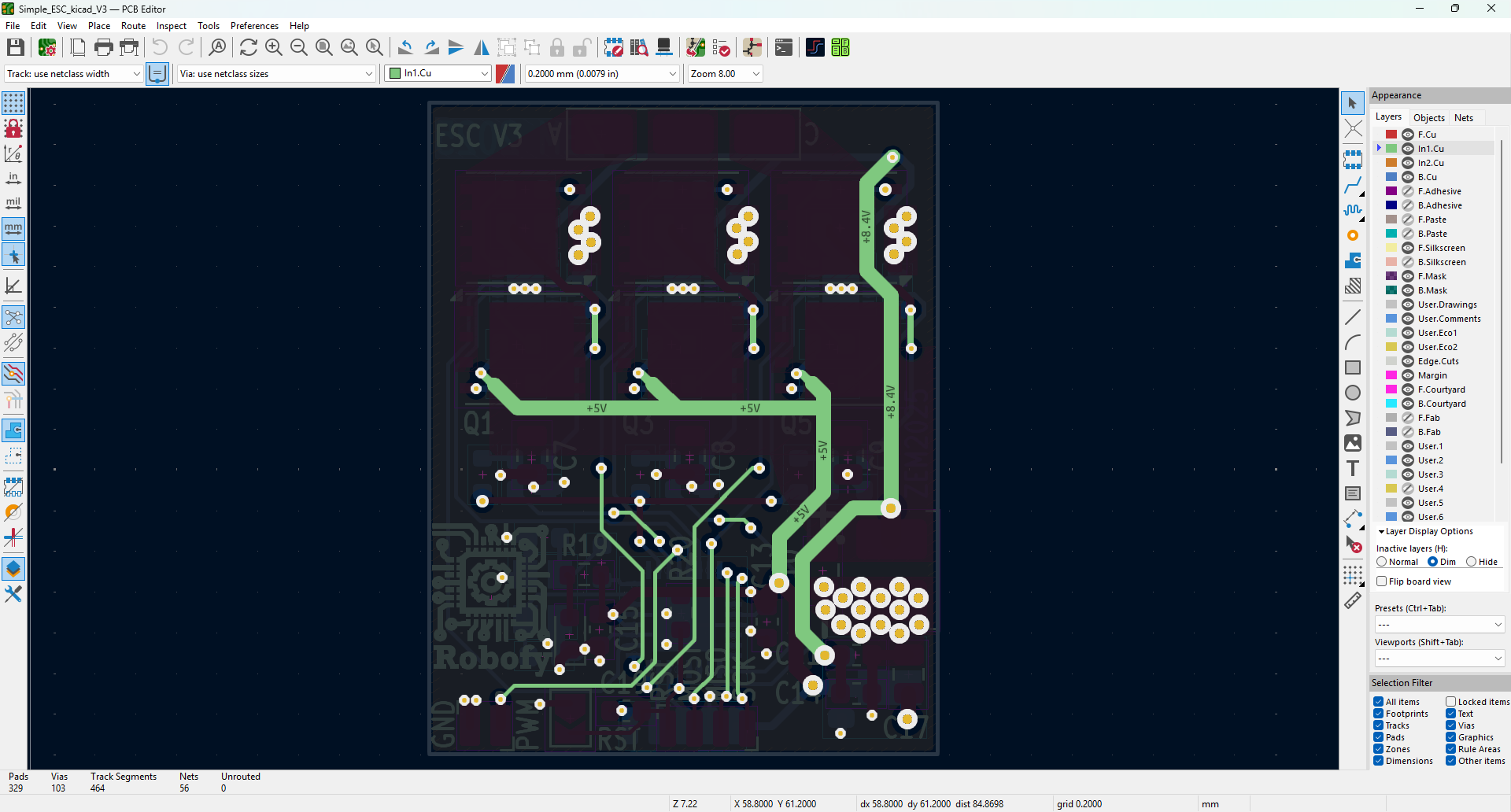
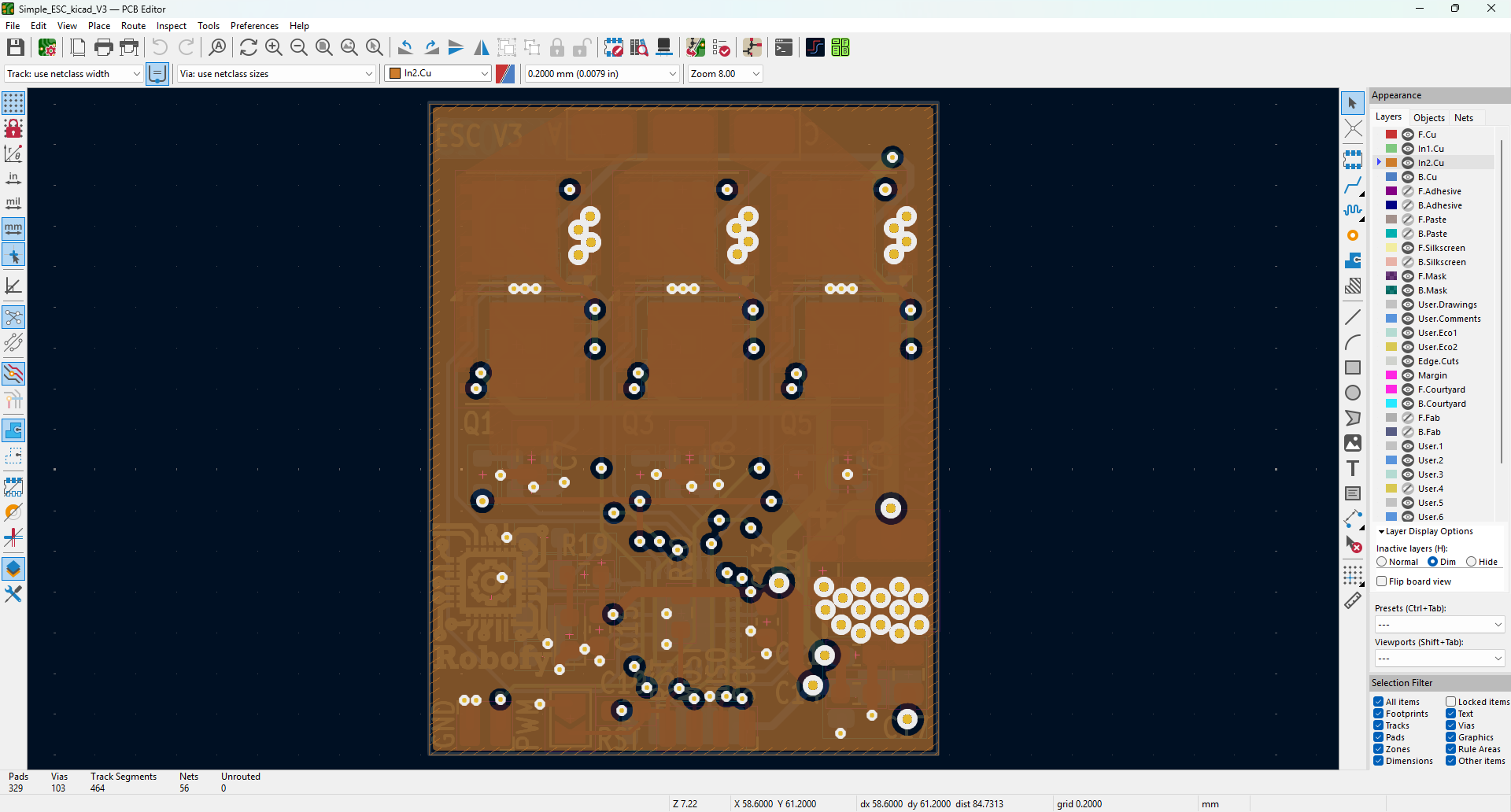
Technical Challenges
This driver utilizes the internal comparator of the ATmega328P microcontroller to detect back-EMF zero-crossing events. During motor operation, the inactive phases generate back-EMF proportional to the rotor speed and position. By monitoring these voltage transitions and detecting zero-crossing points, the microcontroller determines the optimal commutation timing for the next phase transition. This sensorless approach eliminates the need for Hall sensors while maintaining reliable motor control.
The inverter stage consists of 6 N-Channel MOSFETs configured in a standard three-phase bridge topology. Each phase is controlled by a complementary pair of upper and lower switches, allowing bidirectional current flow through the motor windings. The DGD05473FNQ gate drivers provide the necessary voltage amplification to drive the MOSFET gates from the low-voltage logic signals of the MCU, and include shoot-through protection to prevent simultaneous conduction of upper and lower switches on the same phase.
The control logic implements a six-step commutation pattern based on back-EMF zero-crossing detection. Back-EMF sensing requires the motor to reach a minimum speed threshold to generate sufficient voltage for reliable detection; ensuring consistent commutation across the operating range was a key design consideration.
- Educational Value: Clear demonstration of motor control principles and power electronics
- Simplicity: Minimalist design with only essential components, reducing complexity
- Cost-Effectiveness: Uses readily available components with reasonable cost
- Practical Performance: Reliable EDF control for line follower robot applications
- Sensorless Operation: Eliminates Hall sensors, reducing wiring and component count
- Competency Proven: Successfully implemented in the 2025 Mechatronics Education Day Competition
Design Tools
- KiCad
- Mathcad
- VS Code
- SolidWorks
Learning Outcomes
Tools & Technologies:
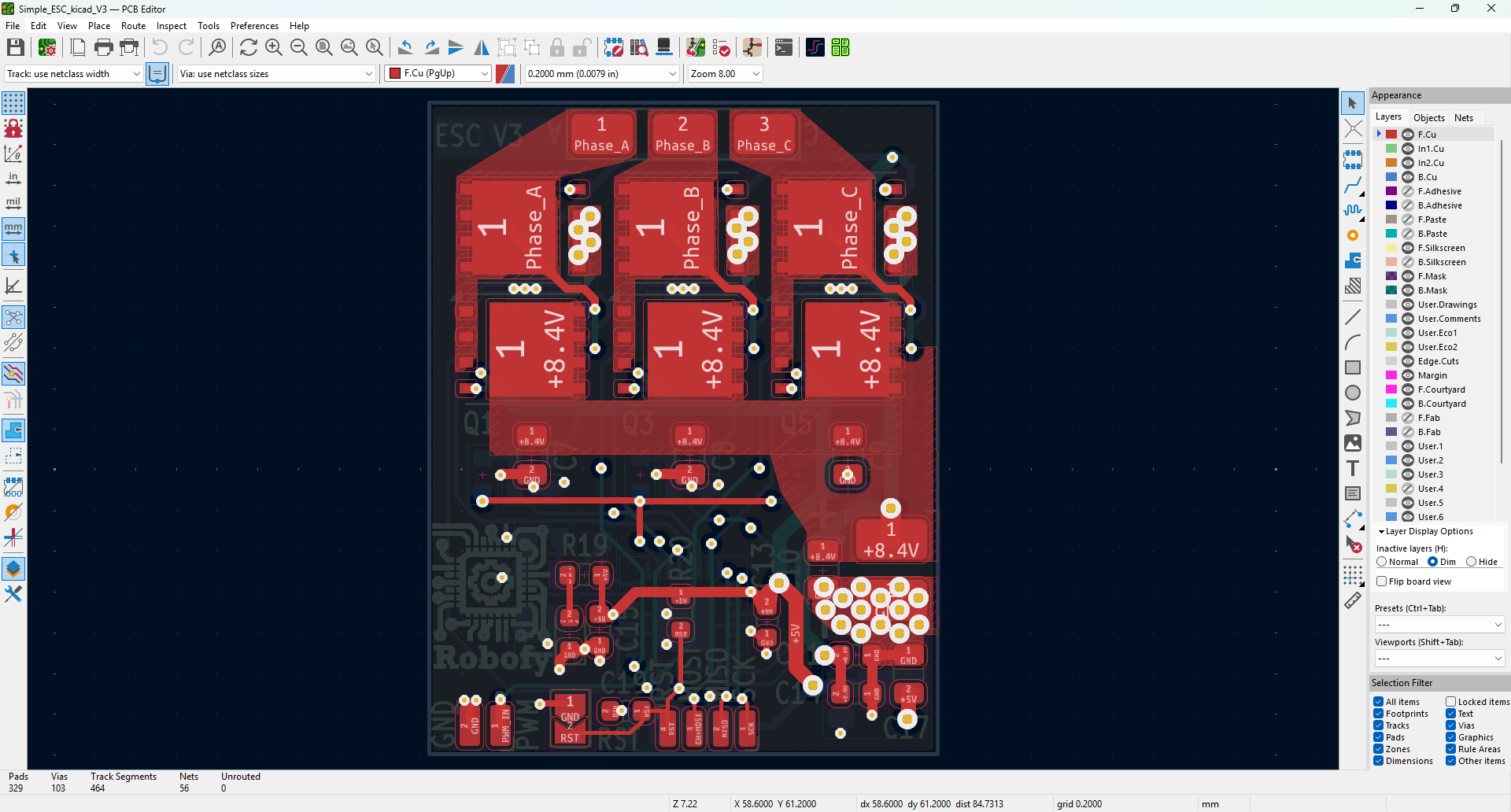
EDA: KiCad; Design: four-layer PCB;
MCU: ATmega328P; Other: Gate Drivers, N-Channel MOSFETs;
Control Method:Back-EMF zero-crossing detection;
Manufacturing: JLCPCB.
This project required extensive research and tuning to achieve reliable motor commutation. It also reinforced knowledge of power electronics, PCB design, and embedded programming using register-level programming.